
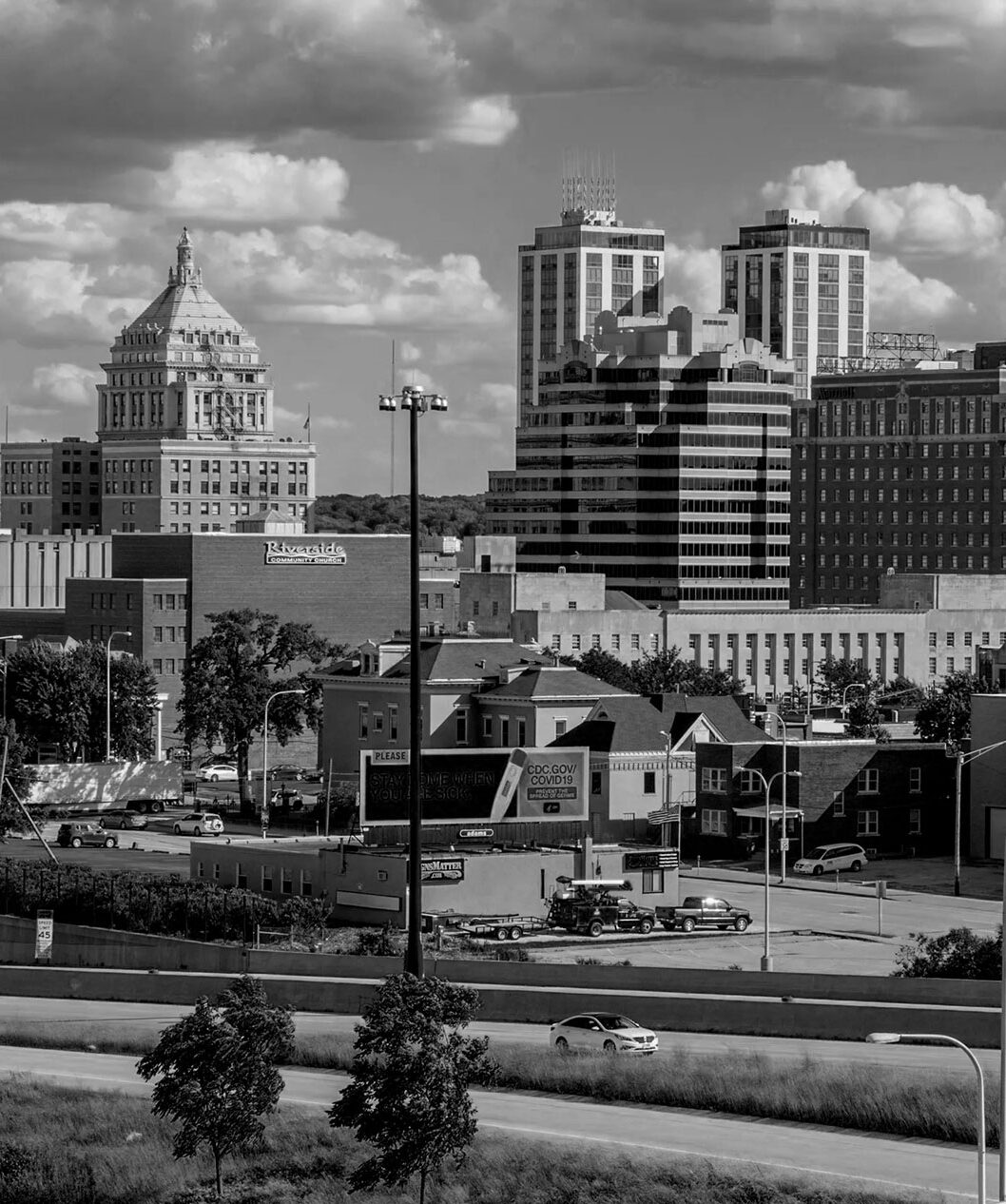
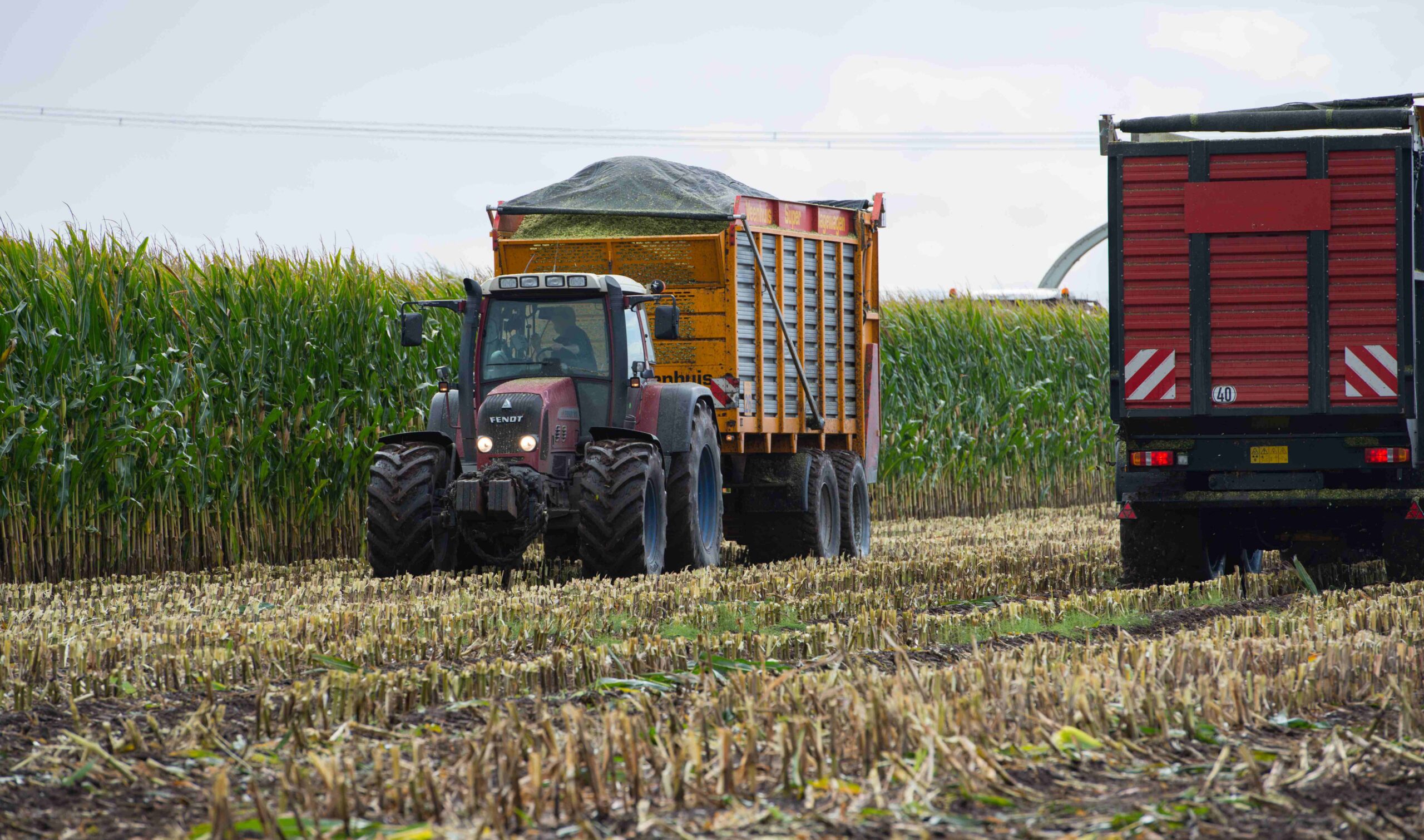
Farm equipment collisions on rural roads follow patterns that ordinary two-car crashes rarely show. A car moving at highway speed may close on a tractor doing 15 miles per hour in a matter of seconds.
That speed gap, combined with narrow roads and wide machinery, creates hazards specific to Peoria County farm country.
These crashes raise questions a normal fender-bender never does. Was the equipment lit and marked as Illinois law requires? Did a driver try to pass during a left turn into a field? Did limited rear visibility hide a car from the operator?
Answering those questions takes more than a quick look at the two vehicles.
Key Takeaways About Peoria County Farm Equipment Accidents
- Fault in a farm equipment collision depends on the facts, not on the type of vehicle involved.
- Illinois law sets specific marking and lighting rules for farm equipment on public roads.
- Left-turn and rear-end patterns account for a large share of these crashes.
- Physical evidence at the scene often answers who did what and when.
- More than one party may share responsibility for a single collision.
Quick Answer: How is fault determined in farm equipment collisions on rural Peoria County roads?
Farm equipment collisions on rural Peoria County roads involve tractors, combines, grain wagons, grain trucks, and other slow or oversized agricultural vehicles. Fault depends on how the collision happened, what each driver did, and whether Illinois traffic and equipment rules were followed. No single factor decides responsibility on its own.
Why Are Farm Equipment Accidents Different From Other Peoria County Crashes?
Farm equipment accidents differ from ordinary crashes because of the size, speed, and road position of agricultural vehicles.
A combine may span most of a narrow county road. A tractor towing a grain wagon may need the full lane to make a turn. These realities change how a collision happens and who may be at fault.
Several features set these crashes apart from a typical car accident.
- Large speed differences give drivers little time to react to slow equipment.
- Wide or long equipment may extend across the centerline or beyond a lane.
- Narrow rural roads and thin shoulders leave little room to avoid a crash.
- Limited rear visibility may hide an approaching car from the operator.
- Field entrances and rural driveways create sudden turning movements.
These factors often overlap in a single collision. A careful look at each one helps show how the crash actually unfolded, rather than who simply struck whom.
What Farm Equipment May Drivers Encounter on Rural Peoria County Roads?
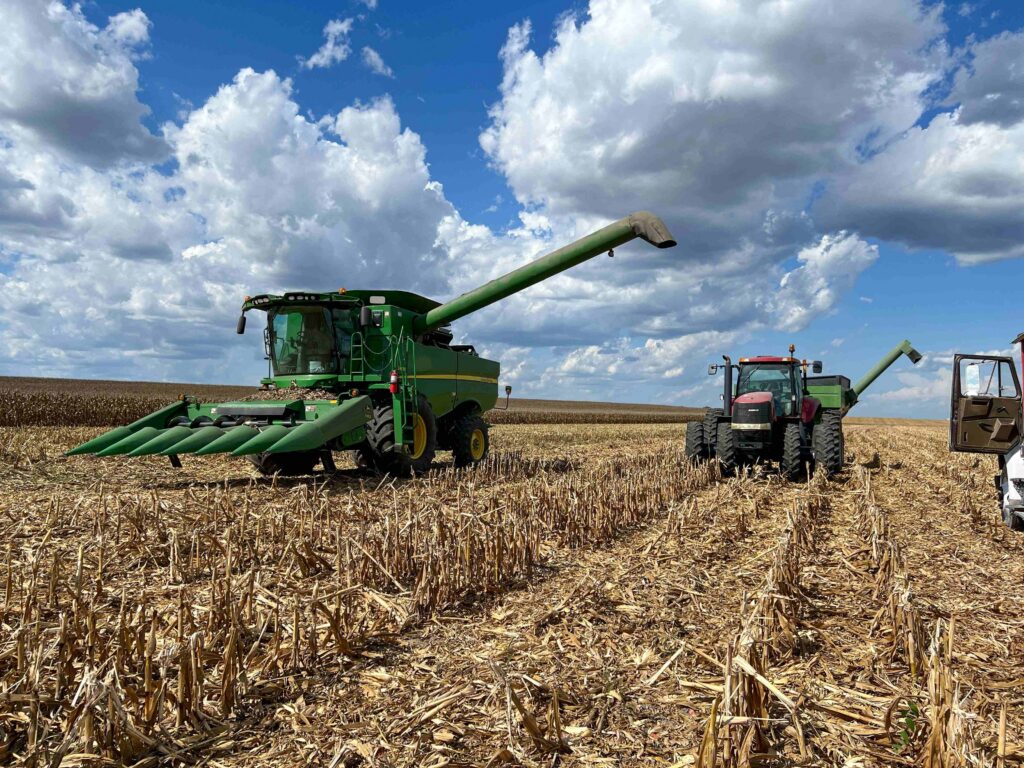
Drivers on Peoria County roads may meet tractors, combines, harvesters, grain wagons, grain trucks, and tractors towing implements.
Each moves slowly and handles differently than a passenger car. Knowing what you are behind helps explain how a farm vehicle accident may occur.
Peoria County produces large amounts of corn and soybeans, which keeps agricultural traffic heavy during planting and harvest. The United States Department of Agriculture reported 113,807 acres of corn for grain and 90,512 acres of soybeans in the county in its 2022 census.
That volume means steady movement of equipment between fields and grain elevators.
What Does the Term Grain Train Mean?
Grain train is an informal term, not a formal Illinois legal classification. Depending on local usage, it may describe grain-hauling agricultural traffic or a tractor pulling one or more grain wagons together. Illinois law does not define the phrase as a standardized vehicle type.
The term still reflects a real hazard during corn harvest and soybean harvest. A long combination takes more room to turn and stops more slowly than a single vehicle.
Its length may also hide warning devices from drivers approaching the rear. A driver who misjudges that length may pull out or pass at the worst moment.
What Illinois Laws Apply to Farm Equipment on Public Roads?
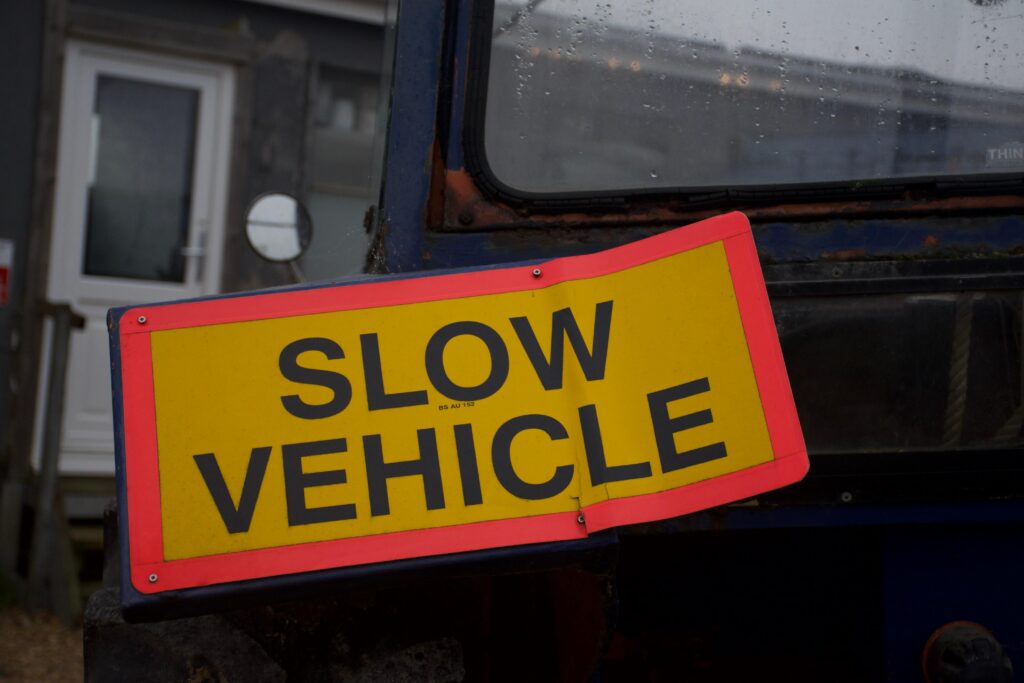
Illinois law sets specific safety rules for farm equipment operated on public highways. These rules cover marking and lighting meant to warn other drivers of slow-moving vehicles. They do not treat farm equipment exactly like ordinary cars.
Under 625 ILCS 5/12-709, a farm tractor or implement of husbandry operated on a highway must display a slow-moving vehicle emblem on the rear.
An implement of husbandry is a vehicle built mainly for farm work, such as a tractor, combine, or grain wagon. The orange triangle warns approaching drivers that the vehicle moves slowly.
Illinois law also addresses combinations, such as a tractor towing a wagon. When a towed unit or its load hides the emblem on the towing unit, the towed unit must carry its own emblem. That rule matters for the long grain-hauling combinations common at harvest.
What Marking and Lighting Rules Apply?
Illinois requires both an emblem and working lights on farm equipment used on public roads. The slow-moving vehicle emblem is the familiar orange triangle mounted on the rear. State agencies also describe required amber and red lighting for use in low light.
The main safety-equipment points include the following.
- A slow-moving vehicle emblem must appear on the rear of qualifying equipment.
- Amber flashing lights should warn drivers to the front and rear.
- Red rear lamps mark the equipment for drivers approaching from behind.
- Reflective material and reflectors add visibility in low light.
A missing or dirty emblem may matter in a collision claim. Even so, a violation of an equipment rule does not by itself prove that anyone caused a crash. Fault still depends on the full set of facts.
Why Do Left-Turn and Rear-End Farm Equipment Collisions Happen?
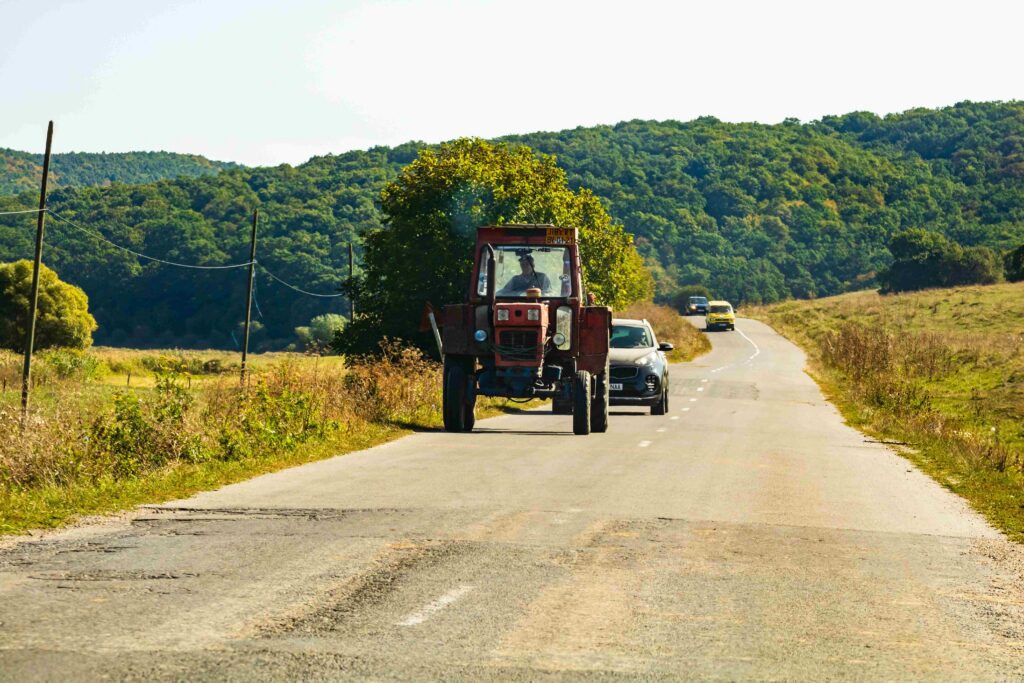
Left-turn and rear-end crashes make up a large share of farm equipment collisions.
The Illinois Department of Agriculture states that nearly half of all incidents between motorists and farm implements involve either a left-hand turn or a rear-end collision. These two patterns share a common thread, which is misjudged movement.
A left-turn crash often happens when a driver tries to pass just as the equipment turns left into a field or driveway. The operator may appear to pull right when actually setting up a wide left turn.
A rear-end crash often happens when a driver approaches too fast and cannot slow in time.
Neither pattern proves fault on its own. A passing driver may misread a turn, or an operator may signal poorly. The details of signaling, speed, and position decide what actually went wrong.
Who May Be Liable for a Peoria County Farm Equipment Collision?
Liability for a farm equipment collision depends on the facts, and more than one party may share it. The type of vehicle does not decide fault. What each person did, and whether equipment met legal requirements, carries far more weight.
Several parties may bear responsibility depending on the circumstances.
- The farm-equipment operator may share fault for an unsafe turn or poor signaling.
- The passenger-vehicle driver may share fault for unsafe passing or speed.
- A farm or agricultural business may be responsible when a worker caused the crash.
- An equipment owner or grain-hauling company may bear responsibility in some cases.
- A manufacturer or repair provider may be involved when a defect or faulty work contributed.
Sorting out these roles takes a close review of employment and ownership facts. Illinois also applies comparative negligence, so fault may be divided among more than one party.
What Evidence May Matter After a Farm Vehicle Accident?
Physical evidence from the scene often answers the key questions in a farm vehicle collision. The position and width of the equipment, the damage patterns, and the warning devices all tell part of the story. This proof matters most in serious or disputed cases.
Once you are home and safe, certain records help preserve what happened. The items below often prove useful in these claims.
- Photographs of the equipment, the roadway, and both vehicles help fix positions.
- The slow-moving vehicle emblem and lights show whether warnings were present.
- Damage, tire marks, and debris help reconstruct the point of impact.
- Witness statements and the police crash report add outside accounts.
- Measurements of road width and sight distance show what each driver could see.
In serious cases, accident reconstruction may combine this proof into a clear sequence. The sooner these records are gathered, the more reliable the picture becomes. Weather, field work, and ordinary traffic tend to erase these details quickly.
How Does Illinois Comparative Negligence Affect a Farm Equipment Accident Claim?
Illinois comparative negligence allows recovery even when the injured person shares some blame, up to a limit.
Under 735 ILCS 5/2-1116, a person more than 50 percent at fault may not recover damages. A person at or below 50 percent may recover a reduced amount based on their share.
This rule fits farm equipment crashes well, since both operators often contribute something. Consider a driver who tries to pass while a tractor makes a poorly signaled left turn. A jury may assign part of the fault to each, which affects any recovery.
Because fault is rarely all on one side in these cases, the division of blame often shapes the outcome. A careful account of each driver’s actions may affect how that fault is allocated.
Common Farm Vehicle Collision Factors at a Glance
The table below outlines common agricultural vehicles and the issues they raise in a collision. It shows why crashes may happen and what evidence may help explain them.
| Farm Vehicle or Equipment | Why Collisions May Happen | Evidence That May Matter |
|---|---|---|
| Tractor | Slow speed, left turns, limited rear visibility | SMV emblem, signals, lights, road position |
| Combine or harvester | Width, limited clearance, reduced visibility | Equipment width, reflectors, lighting, road width |
| Tractor with grain wagon | Long combination, wide turning radius, warning visibility | Emblem placement, hitch position, signals |
| Grain truck | Size, longer stopping distance, elevator traffic | Vehicle data, load information, braking evidence |
| Other farm implement | Width, projections, unusual road position | Flags, reflectors, lights, measurements, photographs |
No condition in this table proves fault on its own. Each simply points to facts that may help explain a given collision.
FAQs for Grain Train and Farm Equipment Collisions on Rural Peoria County Roads
Can I bring a claim if I was a passenger in a car that hit farm equipment?
Yes, a passenger injured in a crash with farm equipment may generally bring a claim. As a passenger, you were not driving, so fault questions center on the two drivers.
You may have a claim against the driver of your car, the equipment operator, or both. The facts of the crash decide which parties may be responsible.
Does auto insurance cover a collision with farm machinery?
Generally yes, standard auto insurance may cover a collision with farm machinery, though coverage varies. Your policy terms, the at-fault party, and available farm or business coverage all affect the outcome.
A single crash may involve more than one insurer. Reviewing every applicable policy helps show what coverage may apply.
What happens if the farm equipment belonged to someone other than its operator?
If the equipment belonged to someone other than the operator, more than one party may share responsibility. An owner, a farm, or a grain-hauling company may bear some fault depending on the arrangement.
Ownership and employment facts guide that analysis. Sorting them out often widens the list of possible sources of recovery.
Does a farm equipment accident claim have a filing deadline in Illinois?
Yes, a farm equipment accident claim in Illinois generally has a filing deadline. Many injury lawsuits allow two years from the injury date, though exceptions apply.
A claim involving a public body may follow a shorter period. Confirming the correct deadline early keeps a valid claim from closing by accident.
What if a grain truck rather than a tractor caused my crash?
If a grain truck caused your crash, the claim may resemble a commercial vehicle case more than a tractor case.
A grain truck moves faster and may carry commercial coverage and a business owner. Load records and vehicle data may become important proof. The type of vehicle shapes both the evidence and the parties involved.
Do I need a lawyer after a serious farm equipment collision?
Maybe, though a serious or disputed farm equipment collision often benefits from legal review. Multiple parties, split fault, and technical evidence make these claims harder than a simple crash.
A lawyer may review the roadway proof and identify who may be responsible. A free consultation helps you decide whether representation makes sense.
Get a Clear Read on Your Rural Road Accident Claim

The window to preserve roadway evidence in a farm equipment collision closes faster than many people expect.
Equipment returns to the field, machinery gets cleaned, and the marks that explain a crash fade with weather and traffic. An early review helps capture that proof while it still tells the full story.
Joel E. Brown examines these rural-road collisions with attention to the equipment, the road, and the Illinois rules that applied. He handles these claims personally, from the first call through settlement or trial, and offers a free consultation.
If a tractor, combine, grain wagon, or grain truck crash has left you or a family member hurt, call (309) 673-4357 to speak with Joel directly.