

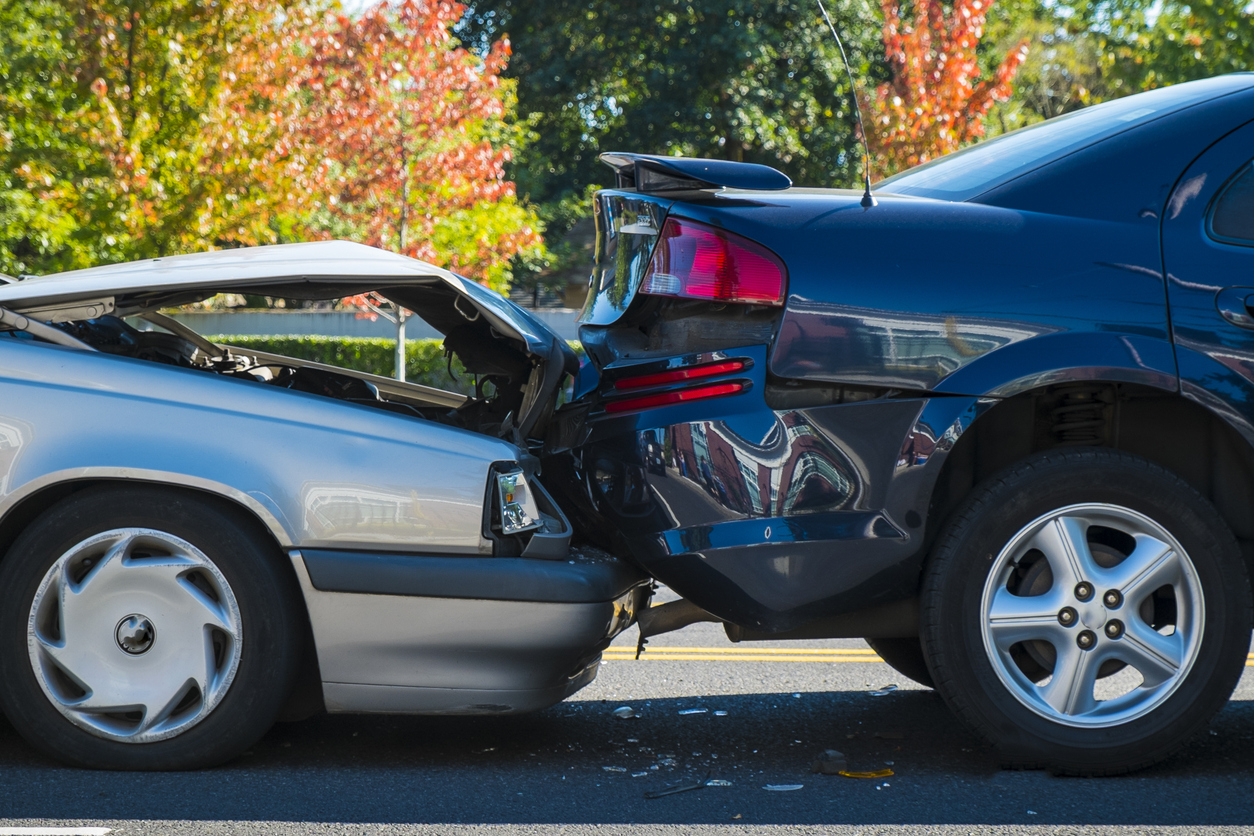
Rear-end collisions are one of the most common types of car accidents. Many of these accidents are the result of a negligent driver in the rear car failing to pay attention; however, the driver in the lead car can sometimes be at fault. Keep reading below to learn all the details about why rear-end collisions happen and who is to blame for them.
How Common Are Rear-End Collisions?
Rear-end collisions are one of the leading types of car accidents every year, and these types of accidents also result in a large number of injuries and deaths each year as well. In fact, rear-end collisions were responsible for 3,300 deaths in 2023 alone. Determining who was at fault for these types of accidents is often not as straightforward and simple as it might seem.
Who Is At Fault for a Rear-End Collision?
Many people automatically assume that the driver of the trailing vehicle is always at fault in a rear-end crash, but that is not always true. In some situations, the driver of the lead vehicle could be at fault. Third-parties, such as equipment manufacturers or even pedestrians, could have some of the blame.
Most rear-end collisions are the result of someone’s negligence. Determining who was negligent is often the key to determining liability for these accidents.
Remember that proving negligence requires showing:
- Duty of care
- Breach of duty
- Causation
- Damages
All drivers owe each other a duty of care to operate their vehicle in a reasonably safe manner. This includes taking reasonable steps to avoid accidents. When a driver breaches this duty and injures someone else, they can be held responsible for the victim’s injuries. Ultimately, the negligent driver is at fault in these types of accidents.
Common Causes of Rear-End Crashes
Rear-end accidents happen for a variety of different reasons.
Some of the most common causes of rear-end collisions include:
- Speeding
- Tailgating
- Reckless or aggressive driving
- Distracted driving
- Equipment failure
- Lack of brake lights
- Sudden or erratic stopping
While the driver of the rear vehicle is often at fault, some of these scenarios put the driver of the lead vehicle at fault. For instance, imagine the lead car has no brake lights and the driver suddenly slams on brakes. This is likely to cause a crash, but the driver in front is to blame.
Comparative Negligence in Rear-End Crashes
In some cases, both drivers may share some of the fault for the accident. For example, imagine that you are following a car too closely, but the car in front of you suddenly slams on their brakes for no reason. Thankfully, the comparative negligence rule in Illinois allows injured victims to recover compensation even if they were partially at fault for their accident.
As long as you are not more than 50% at fault, you may still be able to recover some compensation. However, your recovery will be reduced by your portion of the fault. For instance, imagine in the example above that you are found to be 40% responsible for your crash because you were following too closely. You may still be able to recover 60% of your damages from the other driver.
Types of Evidence Used to Prove Fault After a Rear-End Crash
Proving fault in a rear-end crash requires having enough evidence on your side.
There are many types of evidence that may be used to prove your case, such as:
- Witness testimony
- Photos of the scene and vehicles
- Your own testimony
- The other driver’s testimony
- Surveillance footage
- Accident report
- Expert witnesses
To win a personal injury case after a rear-end crash, you must prove your claim by a preponderance of the evidence. This means that you must have enough evidence to show that your version of the facts is more than likely to be true.
Contact a Peoria Car Accident Lawyer at Joel E. Brown, P.C. for a Free Consultation
If you’ve been injured in a car accident, having the right legal support can make all the difference. At Joel E. Brown, P.C., we’re committed to protecting your rights and helping you pursue the compensation you deserve.
To learn more, contact our skilled personal injury attorney at Joel E. Brown, P.C to schedule a free consultation. We are conveniently located in Peoria and proudly serve Peoria County, IL, and the neighboring communities.
Joel E. Brown, P.C
416 Main Street Suite 1300, Peoria, IL 61602
(309) 673 4357
Available 24/7