

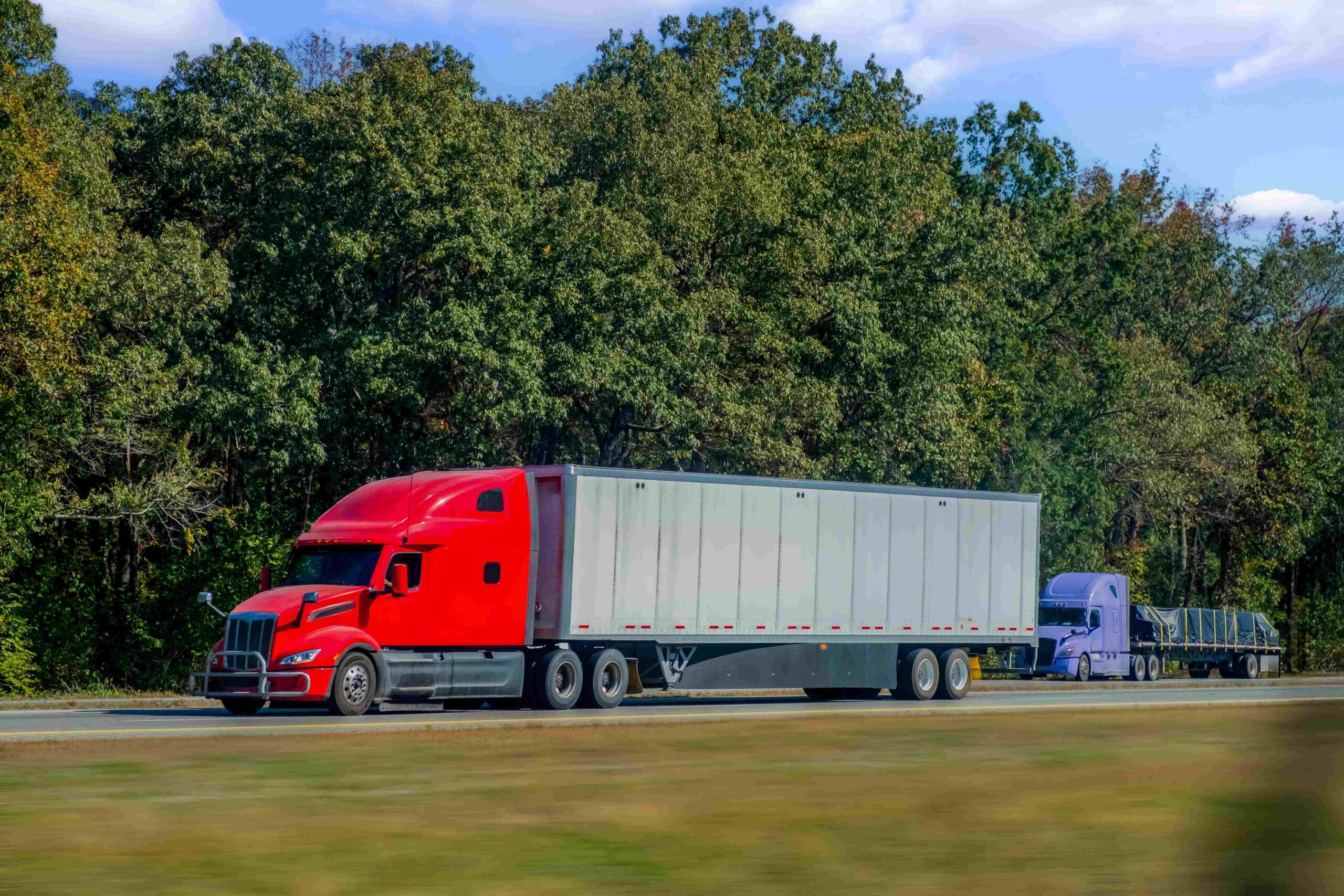
If you were injured in a trucking accident on I-74 or I-155 near Peoria, the steps you take over the next few hours and days may affect both your recovery and any future injury claim.
Getting medical care, preserving evidence, avoiding statements to the trucking company’s insurer, and understanding your legal options are among the most important priorities after a crash.
Truck accident claims are often more complex than car accident cases because they may involve multiple parties, federal safety regulations, and records such as electronic logs, maintenance files, and cargo documents.
Trucking companies and insurers may begin investigating within hours, so early action may help protect important evidence.
If you are recovering from a trucking accident on I-74 or I-155 near Peoria, speaking with an attorney early may help you understand your options and protect important evidence.
What steps should I take after a trucking accident on I-74 or I-155 near Peoria?
After a trucking accident on I-74 or I-155 near Peoria, taking prompt action may help protect your injury claim. Trucking companies often dispatch investigators to the crash scene within hours, and the evidence gathered during that early response may influence how the case develops.
Key Takeaways for Trucking Accidents on I-74 and I-155 Near Peoria
- Trucking companies frequently send claims teams to the scene within hours of a crash, giving them a head start on controlling the narrative and the evidence.
- Federal regulations from the Federal Motor Carrier Safety Administration (FMCSA) govern truck driver hours, vehicle maintenance, and cargo loading, and violations of those rules may serve as evidence of negligence.
- Illinois follows a modified comparative negligence system under 735 ILCS 5/2-1116, so you may still recover compensation even if you share some fault, as long as your share does not exceed 50%.
- Electronic logging device (ELD) data, inspection reports, and driver qualification files all have limited retention windows, making early legal action a priority.
What Steps Matter Most After a Truck Crash on I-74 or I-155?
The steps you take in the days after a trucking accident near Peoria may directly affect the strength of your claim. Once you are home and stable, a few priorities rise above the rest.
Medical Treatment and Documentation
Follow through with every medical appointment your doctors recommend. Gaps in treatment give the insurance company room to argue that your injuries are less serious than you claim. Keep copies of all records, bills, and referrals.
Preserving Your Own Evidence
Your phone may hold some of the most useful evidence in a trucking accident claim. Photos of the vehicles, the road, weather conditions, and visible injuries all matter. So do text messages or call logs showing how the accident disrupted your daily life and your income.
Avoiding Recorded Statements
The trucking company’s insurer may call you within days of the crash and ask for a recorded statement. You have no legal obligation to provide one. Anything you say in that recording may be used to reduce or deny your claim later.
Each of these steps builds a record that is harder to dispute as the case moves forward.
What Federal Regulations Apply to Trucking Accidents in Illinois?
Commercial trucks operating on I-74 and I-155 must follow federal safety rules enforced by the FMCSA. Violations of these trucking regulations may serve as direct evidence of negligence in a Peoria trucking accident claim.
Hours of Service and Driver Fatigue
The FMCSA’s hours of service (HOS) regulations under 49 CFR Part 395 limit how long a commercial driver may operate before resting. The core rules for property-carrying drivers include several strict limits:
- A maximum of 11 hours of driving after 10 consecutive hours off duty
- No driving past the 14th consecutive hour after coming on duty
- A mandatory 30-minute break after 8 cumulative hours of driving
- A weekly cap of 60 hours over 7 days or 70 hours over 8 days
When a driver exceeds these limits and causes a crash, the violation itself may support a negligence claim involving tired truck drivers. ELD data and driver logs are the primary tools for proving or disproving compliance, and carriers are not required to retain that data indefinitely.
Maintenance and Inspection Requirements
Trucking companies must also follow federal vehicle maintenance and inspection standards. Pre-trip and post-trip inspections are required.
If a mechanical failure contributed to a crash on I-74 or I-155, the carrier’s maintenance records and inspection history may reveal a pattern of neglect.
How Do Trucking Accident Claims Differ from Car Accident Claims Near Peoria?
Trucking accident claims in Illinois involve additional parties, regulations, and evidence sources that a typical car accident case does not. The table below highlights some of the main differences.
| Factor | Car Accident Claim | Trucking Accident Claim |
| Liable parties | Typically one at-fault driver | Driver, trucking company, cargo loader, maintenance contractor |
| Governing regulations | Illinois traffic law | Illinois traffic law plus FMCSA federal regulations |
| Insurance coverage | Standard auto policy limits | Commercial policies often ranging from $750,000 to $5 million or more |
| Evidence sources | Police report, photos, witness statements | ELD data, driver qualification files, cargo manifests, maintenance logs, black box data |
| Defense resources | Individual insurer | Corporate legal team, risk management department, insurer |
The number of parties involved and the volume of regulated evidence make trucking accident claims near Peoria more demanding than a standard injury case. Each additional layer also creates additional opportunities to prove negligence.
What Types of Compensation May Be Available After a Trucking Accident?
Compensation in an Illinois trucking accident claim depends on the specific injuries and losses involved. Under Illinois personal injury law, an injured person may seek both economic and non-economic damages.
Economic damages cover financial losses with a clear dollar value. These often include:
- Past and future medical expenses related to the crash
- Lost wages and reduced earning capacity
- Property damage, including vehicle replacement costs
- Out-of-pocket costs for transportation, home modifications, or assistive devices
Non-economic damages address losses that are harder to quantify but no less real, such as physical pain, emotional distress, and reduced quality of life. In wrongful death cases, surviving family members may pursue claims for loss of financial support and loss of companionship.
No two trucking accident cases produce the same result, and no attorney may ethically promise a specific dollar figure. The facts of each case, including the severity of injury, the strength of the evidence, and the number of liable parties, all shape what a claim is worth.
How Joel E. Brown Personal Injury Law Firm Handles Trucking Accident Cases on I-74 and I-155
Joel is a Peoria personal injury lawyer with 34 years of experience, and trucking accident cases on the I-74 and I-155 corridors are among the most complex claims we handle. Joel takes every trucking case personally, from the initial meeting through resolution.
Why the Attorney Matters in a Trucking Case
Trucking claims involve a different set of pressures than a standard vehicle accident. Carriers and insurers often begin investigating quickly after a crash.
Joel matches that pace with a litigation-first approach on serious injury and death cases, filing suit early to gain subpoena power over the carrier’s internal records.
A few specifics about how we approach these cases:
- In qualified cases, Joel meets with clients face to face as quickly as possible, often within one business day of the initial call
- Our contingency fee does not increase if the case goes to trial, and we explain case expenses clearly at the outset
- Joel holds dual licensure in Illinois and Missouri and is a Life Member of the Multi-Million Dollar Advocates Forum
- We have published verified results including recoveries of $3 million and $750,000. Past results do not predict future outcomes
The trucking industry invests heavily in limiting its exposure after a crash. Your legal response needs to match that intensity, and it needs to start early.
FAQs for Trucking Accidents on I-74 or I-155 Near Peoria
How long do I have to file a lawsuit after a trucking accident in Illinois?
You generally have two years from the date of the crash to file a personal injury lawsuit under 735 ILCS 5/13-202. However, the practical window is much shorter because trucking evidence like ELD data and inspection logs may be overwritten or lost if no legal action preserves it.
Speaking with a truck accident lawyer within the first few weeks is a wise step.
May I still recover compensation if I was partly at fault for a truck accident on I-74?
Yes, you may still recover compensation under Illinois’ modified comparative negligence law if your share of fault does not exceed 50%.
Your total recovery is reduced by your percentage of fault. The trucking company’s insurer almost always argues shared fault, so the strength of your evidence matters.
What if the trucking company offers me a settlement right away?
Be cautious with any early settlement offer from a trucking company or its insurer. Early offers typically arrive before the full extent of your injuries and future medical needs are known.
Accepting a settlement generally closes the claim permanently. Having a trucking accident attorney review any offer before you respond may help protect your long-term interests.
Does it matter which trucking company was involved in my crash?
Yes, the specific carrier matters. Each trucking company has its own FMCSA safety record, including past violations, out-of-service orders, and crash history.
That safety record may be relevant to your claim and may help establish a pattern of negligence. Your attorney may access FMCSA safety data and carrier-specific records through the discovery process.
Take the Next Step After a Trucking Accident on I-74 or I-155 Near Peoria
Trucking companies and their insurers may begin building a defense soon after a crash. As time passes, records, electronic data, witness accounts, and other evidence may become more difficult to preserve or obtain.
Joel E. Brown has spent 34 years representing clients against well-funded defendants in Peoria County courtrooms.
He uses a flat contingency fee with no escalator, meets with every client in person, and may file suit early in serious trucking injury and wrongful death cases to seek access to the carrier’s internal records. Past results do not guarantee future outcomes.
If a trucking accident on I-74 or I-155 has affected your family, acting promptly may help protect important evidence and your ability to pursue a claim. Call (309) 673-4357 to discuss your legal options.