

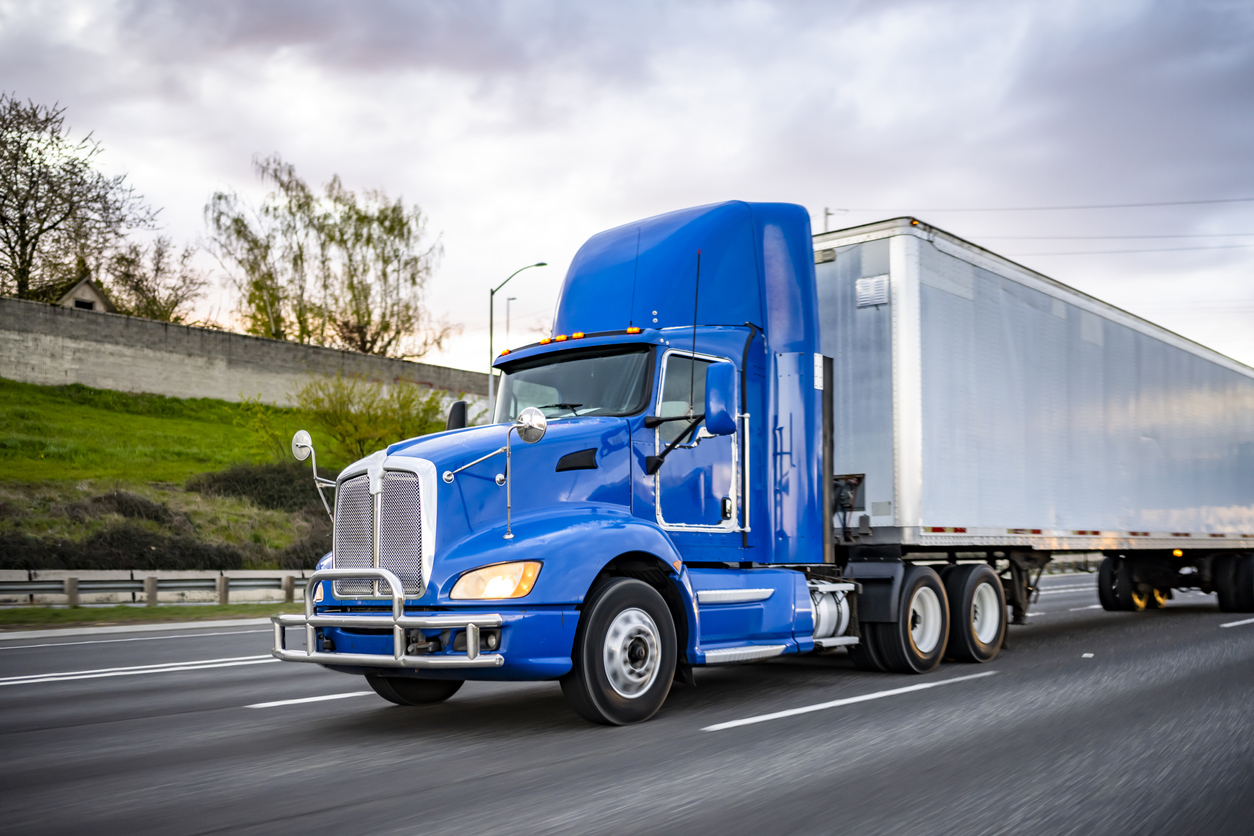
Interstate trucking in Illinois involves moving goods or passengers across state lines and is regulated primarily by the FMCSA. Intrastate trucking occurs solely within Illinois and is governed by state agencies such as IDOT and the ICC.
While both forms of trucking must meet core safety standards, each follows its own regulatory framework, licensing rules, and compliance requirements. Understanding the basic distinction between interstate and intrastate operations provides important context for how Illinois manages commercial carriers and enforces trucking laws.
What Is Interstate Trucking?
Interstate trucking refers to any commercial transportation that crosses state lines or involves cargo with an interstate origin or destination. Even if a truck never physically leaves Illinois, the shipment may still be considered interstate commerce if the goods are part of a multistate supply chain.
Interstate carriers must comply with federal rules set by the FMCSA, including registration, safety standards, hours-of-service regulations, insurance minimums, and operating authority requirements. These rules are designed to create uniform safety standards for carriers operating across the United States.
What Is Intrastate Trucking?
Intrastate trucking is limited to commercial transportation that begins and ends within Illinois. These carriers follow state-level rules enforced by the Illinois Department of Transportation (IDOT) and the Illinois Commerce Commission (ICC).
While intrastate trucking does not require federal operating authority, carriers must still comply with state-specific licensing, insurance, safety, and registration requirements. Illinois regulations ensure that carriers operating only within the state maintain safe vehicles, qualified drivers, and proper documentation.
Key Differences Between Interstate and Intrastate Trucking in Illinois
Although the two forms of trucking share similar safety goals, several major differences affect how carriers operate:
- Regulatory oversight: FMCSA governs interstate operations, while IDOT and the ICC oversee intrastate carriers.
- Operating authority: Interstate carriers must obtain federal authority; intrastate carriers must secure intrastate authority through the ICC.
- Hours of service: Illinois generally follows federal HOS rules, but some intrastate operations may qualify for state-specific exceptions.
- Registration and numbering: Most interstate carriers must display a USDOT number and FMCSA authority; many intrastate carriers also require USDOT numbers depending on weight and cargo type.
- Insurance minimums: Federal law mandates higher insurance requirements for interstate trucking, particularly for hazardous materials and passenger transport.
These distinctions impact compliance obligations, liability, and operational logistics for commercial fleets.
How Illinois Enforces Trucking Regulations
Illinois enforces trucking standards through several agencies, including IDOT, the ICC, and the Illinois State Police. Enforcement tools include roadside inspections, weigh-station checks, audits, and compliance reviews.
Violations can result in fines, out-of-service orders, or loss of operating authority. Whether a carrier is operating interstate or intrastate determines which set of regulations applies and which agency oversees enforcement.
What Should I Do After a Truck Accident in Peoria, IL?
A truck accident victim may incur substantial medical bills, lost wages, and other damages. Whether the truck involved was operating intrastate or interstate, it is critical to take steps to protect your rights and preserve evidence.
Victims should:
- Call 911 to report the accident
- Move to a safe location if possible
- Avoid admitting fault or discussing details of the crash
- Ask witnesses for their names and contact information
- Take photos and videos of the scene
- Seek immediate medical care and follow all treatment recommendations
- Do not provide written or recorded statements to insurers or the trucking company without legal advice
Taking these actions can help establish liability and strengthen any future claim.
A Peoria Truck Accident Lawyer Can Help
Interstate and intrastate trucking in Illinois operate under different regulatory systems, but both aim to ensure roadway safety. Understanding these distinctions is important, especially after a truck accident, as they can affect liability, insurance, and the investigation process.
To learn more, contact our skilled personal injury attorney at Joel E. Brown Personal Injury Law Firm to schedule a free consultation. We are conveniently located in Peoria and proudly serve Peoria County, IL, and the neighboring communities.
Joel E. Brown Personal Injury Law Firm
416 Main Street Suite 1300, Peoria, IL 61602
(309) 673 4357
Available 24/7